Los Angeles is a study in contrasts. Desert-adapted hills sit next to pocket neighborhoods lush with jacarandas, and morning fog rolls in on the same streets that bake in late-afternoon sun. Landscaping here works when it reads the site honestly, manages water with precision, and uses materials that handle heat, sun, and wind without complaint. If you approach a Los Angeles property like a temperate East Coast yard, you will fight the climate and drain your budget. If you design for Southern California conditions, you can build outdoor rooms that look good year round and raise property value in a measurable way.
I have sat at plenty of kitchen tables in the Valley and on the Westside, walking through plans with homeowners who want color without the water bill, privacy without a 20-foot hedge, and a place to entertain that does not look dusty by August. The good news is those goals are compatible. The trick is to work with the microclimate, choose plants that thrive in Mediterranean patterns, and invest in infrastructure you will not see but will feel every month when the utility bills arrive.
Start with the microclimate you actually have
Los Angeles is not one climate, it is many. A Venice bungalow three blocks from the beach lives under coastal influence with salt air, mild highs, and cooler nights. A Studio City hillside can swing from chilly mornings to 100-degree afternoons in September. Pasadena gets a few more degrees in summer and a touch more winter chill than Santa Monica, which matters for plant selection and pest cycles.
Average rainfall across the city runs roughly 12 to 15 inches per year, mostly from November to March. Summer is essentially dry. On a south-facing slope, evapotranspiration can pull a gallon or more per square foot per week from thirsty turf in peak summer. That is why the smartest landscapes lean into hydrozoning, grouping plants by water need so drip irrigation can be dialed to the minimum that keeps each group happy. It is also why you avoid the impulse to plant that hydrangea along a stucco wall that faces southwest.
Sun mapping, wind exposure, and soil type form the rest of the baseline. Marine layers can delay morning sun on the Westside. Afternoon winds can desiccate hilltop sites. And soil in LA ranges from beachy sand near the coast to tight clay in the flats, with decomposed granite on slopes. Each texture handles water differently. Clay holds moisture and can suffocate roots in winter if irrigation continues at summer rates. Sandy loam drains fast and needs frequent, smaller doses to keep root zones hydrated.
A quick field test helps. Dig a 12-inch-deep hole, fill it with water, and time the drain. If it empties in under an hour, you will lean on organic matter and perhaps polymers in planting pits to improve water holding. If it takes more than four hours, loosen with gypsum, add compost, and stay strict about run times to avoid chronic wet feet for desert natives.
The design brief: curb appeal that earns its keep
When you renovate a Los Angeles landscape, you chase two wins at once. First, make the property look cared for, intentional, and fitting to the architecture. Second, lower long-term operating costs and maintenance load. The second point matters as much as the first, because buyers ask about water bills and maintenance when they walk a property. A Homeowner’s Guide to Landscaping Los Angeles Properties that ignores those questions leaves money on the table.
For curb appeal, clean lines and layered planting win. A crisp path, consistent edging, evergreen structure, and seasonal punctuation go farther than a sprawling plant list. If you have a 1950s ranch, midcentury planting palettes with textural succulents, grasses, and low shrubs will feel right without reading as a theme park. For Spanish Revival homes, muted, drought-tolerant Mediterranean species like rosemary, lavender, and olives look native to the architecture. The Modern Landscaping Guide for Los Angeles Properties steers away from forced color blocks and toward mixed textures that catch side light in the evening.
Privacy without a view-killing wall is possible with the right species and spacing. Upright strawberry tree, Carolina cherry laurel in columnar form, or bay laurel can build living privacy screens that respond well to selective pruning. Avoid plants on the city’s invasive list, and remember that hedges need access for maintenance. A 2-foot gravel strip behind a hedge gives your gardener room to keep the backside clean.
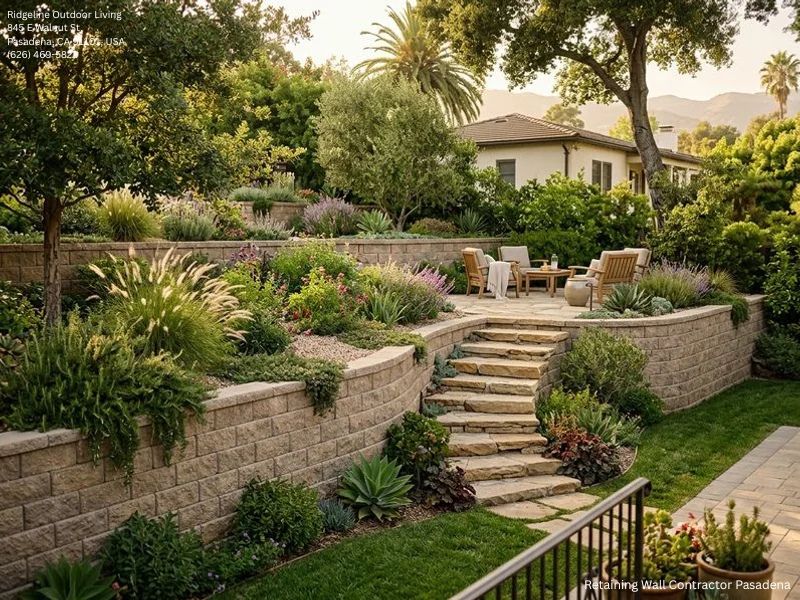
If you have a slope, design with gravity, not against it. Terraces cut into grade can create usable platforms, but they need drains and stable retaining details. On slopes steeper than 2:1, deeply rooted natives like toyon, ceanothus, and buckwheat help lock soil while delivering flowers and habitat. Combine jute netting and hydroseeding for first-year hold, then let the perennials take over.
Water is the governing constraint, so build for it
Los Angeles water use rules have tightened over the years, and drought cycles will not stop. I have watched clients convert spray-irrigated front lawns to smart drip systems and cut their irrigation water by 30 to 60 percent while improving plant health. Well-designed drip puts water where roots live, not on sidewalks. A weather-based controller tied to a flow sensor will pause the system during rain and alert you to breaks. In my practice, the repair we perform most often is fixing a nicked lateral line after other trades finish work. A flow sensor pays for itself the first time it catches a leak.
If you still want turf, use it surgically. A 200-square-foot play patch can be worth the water for a family with kids. Choose warm-season hybrids like TifTuf bermuda or St. Augustine for full-sun areas, and commit to aeration and deep watering to encourage roots down, not sideways. For anyone else, consider a meadow of native Carex pansa or a low, stepable groundcover like Kurapia. Both read green from the curb, handle heat, and use a fraction of the water of conventional fescue.
Check local rebate programs before you start. LADWP and regional water agencies have offered turf replacement incentives that vary by year and location. When available, they can offset a meaningful slice of project costs if you replace high-water turf with climate-appropriate planting and efficient irrigation. Terms change, and documentation is strict, so read the current program sheet and take date-stamped photos before demolition.
Soil, mulch, and the long game of plant health
Healthy landscapes start underfoot. Los Angeles soils often test alkaline, which can lock up micronutrients for plants that prefer a neutral pH. A lab soil test costs less than a nice dinner and guides smarter amendments than guesswork at the nursery. I have walked properties where citrus trees suffered chlorosis for years while getting the wrong fertilizers, all because no one spent the 20 minutes to collect samples.
Add organic matter where it counts, but do not treat every bed the same. California natives usually prefer lean soils; over-amending their planting holes can trap them in a sponge that stays too wet. For Mediterranean and desert species, backfill with native soil, break any glazing on the sides of the hole, and top dress with compost and a coarse mulch. Keep mulch 2 to 3 inches deep in planted beds, and pull it back a few inches from trunks to avoid rot. Gravel mulch looks clean in contemporary designs, but remember that rock stores heat. In hot zones, a mixed approach often works best, with organic mulch around perennials and decorative gravel in low-traffic accents.
Picking plants that thrive, not just survive
The Complete Landscaping Guide for Los Angeles Homes and Properties would not be complete without plant specifics. The palette is wide, and the trick is pairing look with performance. Mix natives with proven non-natives that fit the water and heat profile of the site.
For small trees, consider desert willow for a summer flower show without high water demand, or Arbutus unedo for evergreen structure and red fruit that birds love. Olive varieties like ‘Swan Hill’ landscaping Pasadena CA (fruitless) bring the Mediterranean vibe and handle reflected heat, but they do drop leaves year round. For medium shrubs, ceanothus provides spring bloom and is a bee magnet, but it needs excellent drainage and resents summer water once established. If you want a bulletproof evergreen with a clean look, dwarf Podocarpus holds a narrow shape beside a driveway without hitting you with spikes.
Succulents earn their place when they are used as sculptural accents, not as the entire yard. Agave ‘Blue Glow’ reads like glass in evening light. Aloe arborescens fires orange in winter when most gardens look flat. Pair them with swaying grasses like Lomandra ‘Breeze’ or Pennisetum ‘Fairy Tails’ for motion.
Color without constant irrigation comes from Salvias, rockroses, yarrow, and penstemon. Each can be cut back hard in late winter to flush clean in spring. For shade, Los Angeles has more than you think under mature ficus or jacaranda canopies. Bergenia, aspidistra, and clivia make tough understory choices if irrigation can hold the zone barely moist.
Edibles fit too, but position them wisely. Citrus wants six or more hours of sun and good drainage. Raised beds for vegetables do well when tucked near the kitchen on an irrigation zone that can water more frequently than the ornamentals. If you live in higher fire risk areas near canyons, keep edibles and lush plantings inside your defensible space plan and maintain distance from structures.
Hardscape that takes sun, foot traffic, and hose downs
Pavers, concrete, and stone age differently under LA sun. Poured concrete patios can craze and discolor if mix and curing are not handled well, especially in summer pours. Ask for mockups and understand that lighter integrally colored concrete will show dirt but stay cooler underfoot. Large-format porcelain pavers have matured into a strong option for pool decks and modern patios. They resist staining, stay dimensionally stable, and clean with a quick rinse.
Decomposed granite (DG) paths look right at home in Mediterranean schemes and cost less than stone. Seal DG with a binder to control tracking and regrade high-traffic areas every few years. If you have roots from mature street trees pushing paths, choose segmented pavers that can be lifted and reset rather than monolithic slabs that will crack.
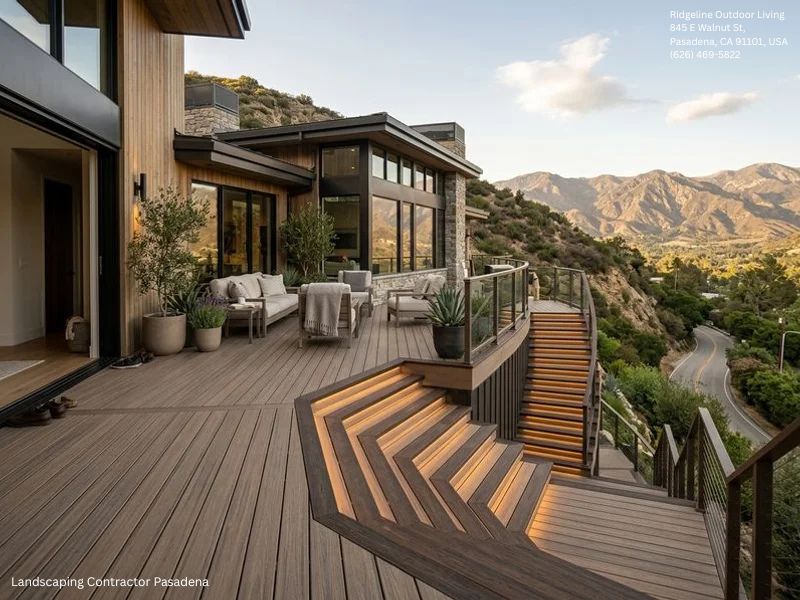
Decks are still popular in the hills where level ground is a luxury. Thermally modified ash and high-quality composites handle heat better than traditional redwood. If you go with composite, pick a lighter color to limit heat gain.
Outdoor kitchens and fireplaces transform spaces into real living rooms. Gas lines bring convenience, but they trigger permit review and coordination. Keep kitchen runs short and plan vented doors for storage cavities so grills do not heat-trap and warp nearby materials. In neighborhoods with stricter noise ordinances, orient social spaces to keep voices off the street.
Lighting for safety and mood, not stadium glare
The best landscape lighting in Los Angeles hides the source and reveals texture. Downlights from trees or structures mimic moonlight and avoid glare in neighbors’ windows. Step lights and low path lights mark travel without reading like a runway. Warm color temperatures, 2700 to 3000 Kelvin, flatter stucco, stone, and plant foliage. With LED systems, plan for dimming, because the garden you want at dusk might feel bright at midnight.
Wildlife matters. Avoid blue-rich light that confuses pollinators, and keep riparian-adjacent properties dark where possible. Simple timers and astronomic clocks handle seasonal shifts without fiddling.
Budgets and where the money actually goes
Costs in Los Angeles vary widely with access, scale, and geology, but a few truths hold. Tight backyards with no side access cost more to build because everything moves by hand or small machinery. Hillsides with even modest retaining needs will spend heavily on engineering and drainage. On flat lots with clear access, money shifts to finishes and planting.
For planning purposes, many full-property renovations with new irrigation, planting, and modest hardscape land in a range from $40 to $120 per square foot. Projects heavy with stone, pools, or large structures push higher. Here are common line items I see repeatedly:
- Site work and demo often runs 5 to 15 percent of a landscape budget, more if you need hauling or root grinding under old lawns. Irrigation, including a smart controller, valves, drip, and lateral lines, commonly falls between $4 and $10 per square foot of planted area. Plant material typically accounts for 10 to 20 percent of total, depending on tree caliper and density. Paver patios in quality porcelain or concrete units often price in the $20 to $40 per square foot range installed, while cast-in-place concrete with decorative finish can land $15 to $25 per square foot excluding structural work. Synthetic turf has tightened its quality in recent years. Expect $12 to $20 per square foot installed for reputable products with proper base prep. Make sure the plan includes a way to rinse and sanitize in pet zones.
Maintenance matters in the math. A mow-and-blow crew might charge $150 to $300 per month for small city lots, and they will keep things tidy. For low-water gardens with perennials and hedges, a horticulturally minded crew costs more, often $300 to $700 per month, but they will prune correctly and protect your investment. The Smart Homeowner’s Landscaping Guide for Los Angeles Properties does not chase the lowest monthly number. It hires skill that keeps plants on the right side of healthy and attractive.
Permits, HOAs, and rules you do not want to meet the hard way
Even a straightforward front yard can trigger rules. Street tree work in Los Angeles often needs a permit or city arborist approval. Exterior walls and fences have height limits, especially within front yard setbacks, and corner lots have visibility requirements to protect sightlines for drivers. Gas lines for fire features or outdoor kitchens require permits and inspections. If you live in a hillside zone, grading thresholds are low. Move more than a defined amount of soil and you will need engineered plans.
Homeowners associations vary. Some love drought-tolerant fronts, others require a review board to sign off on plant lists and finishes. If your neighborhood still has lawn minimums on the books, bring them current literature and examples of successful local xeriscapes that look refined. Neighbors respond to beauty that fits the street, not to the word drought-tolerant.
Fire smart, especially near canyons and chaparral
Many Los Angeles properties sit near wildland interfaces. Hardscape within the first five feet of a structure reduces ember ignition risk. Choose noncombustible mulch like gravel near foundations, and keep plants spaced with attention to horizontal and vertical separation. Maintain trees by lifting canopies to keep ladders of fuel from forming, and clear roofs and gutters before Santa Ana winds pick up. A well-pruned olive is safer than a dense, resinous conifer against eaves.
A practical build sequence that saves headaches
On paper, landscape projects read like linear processes. On site, sequencing and coordination separate smooth builds from messy ones. Years of doing this taught me to lock decisions in phases so subs do not trample each other’s work. If you want an efficient path from first meeting to the final sweep, stick to a simple discipline.
- Assess the site and create a concept that fits water budgets, microclimate, and architecture. Test soil, map utilities, and sketch hydrozones before picking plants. Engineer grading and drainage to move water off structures and into infiltration where possible. Install sleeves for future utilities before you pour anything. Build hardscape while protecting future planting zones. Keep base compaction tight under pavers and light under tree pits. Install irrigation with a pressure-regulated, filtered backbone and zone for plant communities, not just areas. Plant smart, mulch, program the controller, and commit to an establishment period with deep, infrequent watering that encourages roots down.
That last line matters. I have seen crews baby new landscapes with daily spritzing. That grows shallow roots that fail in August. Early discipline sets a garden up for low-water life.
Maintenance calendar for LA conditions
Los Angeles has two real seasons for maintenance: the wet half and the dry half. You can keep a property sharp with a predictable rhythm that adjusts watering and pruning to plant cycles rather than to a calendar pulled from a different climate.
- Late winter into early spring, reduce irrigation while rains persist, cut back salvias and grasses, feed citrus, and inspect drains for sediment after storms. Late spring, transition irrigation to deeper, less frequent cycles, refresh mulch, stake new trees for wind, and check drip emitters for clogs. Mid to late summer, monitor stress during heat waves, raise mower height on any turf, and avoid heavy pruning that exposes interiors to sun scorch. Early fall, plant natives and perennials when soil is still warm and rains are near, adjust controllers for shorter days, and service lighting timers. After the first big storm, walk the property, look for erosion, settle DG paths, and clear any leaf buildup around foundations.
A small notebook or app log helps. Note run times, plant responses, and pest sightings. Patterns emerge on a site by the second or third year, and that lets you tune inputs down without risking plant health.
Common mistakes I still see, and easy fixes
The most persistent error is overwatering, especially in clay soils. If you see fungus gnats when you disturb mulch, or if rosemary turns sickly yellow at the base, you are likely running too long too often. Shorten runs, space them out, and check for low spots. The second error is planting too densely to make a new garden look full. Give mature sizes some respect. You can always fill a first-year gap with annual color in pots.
Another frequent issue is reflective heat. South and west exposures bounce off stucco, and plants with tender leaves will crisp. Use shade sails, light-colored mulches, or a trellis with a deciduous vine like grape or wisteria to create seasonal shade. In alleys and narrow side yards, air conditioners exhaust heat onto plants. If that area must be green, choose heat-tolerant species like lomandra or rosemary and protect them with a perforated screen.
Finally, do not ignore the small, boring infrastructure details. Sleeve conduit under paths for future lighting or irrigation, even if you do not need it now. Mark valve and junction box locations on a plan you keep with your house documents. The day you need to find a buried valve under gravel, you will thank your past self.
Timelines, expectations, and living with a site that matures
A thoughtful landscape in Los Angeles takes shape over months and matures over years. From first site visit to permit-ready drawings can take 4 to 12 weeks depending on scope and city load. Construction timelines vary from 3 weeks for a straightforward front yard refresh to 4 to 6 months for full-property builds with retaining, outdoor kitchens, and lighting. Plant establishment is a season, not a day. Expect to hand-water a few problem spots the first summer, even with a well-tuned controller.
I often set two milestones with clients. The first is the day we wrap construction and walk through the controller and maintenance plan. The second is the one-year anniversary, when we prune to structure for the first time and swap any plants that did not make it. Landscapes are living systems, and a 90 to 95 percent survival rate is a success in our climate, especially after a hot summer.
Balancing trends with what ages well
Trends come and go. White gravel and blue agaves look crisp right now, but ten years from now, authenticity and restraint will still feel right. If you want to touch trends, do it in moveable pots, furniture, and color accents. Invest money in grading, drainage, irrigation, and trees. Those pay you back in function and shade, and they anchor a property through styles.
Ridgeline Outdoor Living’s Landscaping Guide for Los Angeles Properties and other trade resources often highlight big looks: sculptural cacti, corten steel, and immaculate pavers. The look can be fantastic, but remember the basics. Steel goes rusty near salt air. Cacti drop spines, which hurt bare feet on pool decks. Pavers need consistent joint sand and periodic cleaning. Beauty is maintenance you are willing to do, not just the photo on day one.
How projects actually begin, from a seasoned notebook
A few years back, I walked a 6,000-square-foot lot in Mar Vista with a simple brief: lose the water-hungry front lawn, make a side yard for dining, turn the back into a kid-and-dog zone, and keep it all under a defined budget. The front converted to a gravel court with three olive trees underplanted with lavender and yarrow. A decomposed granite path connected a new cedar gate to the front door. The side yard got a 12 by 20 porcelain paver patio, a narrow kitchen with a 24-inch grill and fridge, and a vine-covered trellis for shade. The back ditched wall-to-wall turf for a Kurapia rectangle boxed by low hedges and a small raised bed for tomatoes and herbs.
Water usage dropped by more than a third the first summer. The olives cast patterned shade by year two, and the Kurapia stayed green through heat with less water than the old fescue ever needed. The maintenance crew learned the plant palette and tuned the irrigation down a little more each season. It was not flashy, but it fit the house, the block, and the climate.
Where to go from here
Whether you are sketching ideas on a napkin or assembling bids, frame your project around fundamentals that matter in Los Angeles. Pick a plant palette that suits your microclimate. Design hardscape that handles heat, traffic, and the occasional storm. Build an irrigation system you can trust, then maintain it with a seasonal eye. Take advantage of programs when they exist, understand your permitting context, and choose contractors who show you how they will protect your investment below the surface, not just above it.
If you want more structured inspiration, The Ultimate Landscaping Guide for Los Angeles Properties, The Essential Landscaping Guide for Los Angeles Property Owners, and Landscaping Guide for Los Angeles Properties: How to Increase Curb Appeal and Value are all phrases you will see online, sometimes attached to checklists and galleries. Use them for ideas, then tailor them to your block, your sun, and your habits. When you do, the result will feel like it grew there on purpose, and it will keep looking good long after the novelty wears off.
Business Name: Ridgeline Outdoor Living
Address: 845 E Walnut St, Pasadena, CA 91101, United States
Phone: (626) 469-5822
Ridgeline Outdoor Living
Ridgeline Outdoor Living is a Pasadena-based landscape design-build company serving Greater Los Angeles with custom outdoor living, hardscape, and drought-tolerant landscape solutions. The company specializes in patios, retaining walls, outdoor kitchens, drainage, hillside projects, and turnkey landscape construction, handling projects from design and permitting through final build and warranty.
845 E Walnut St, Pasadena, CA 91101, USA
Business Hours:
- Monday – Saturday: 8:00 AM – 6:00 PM
- Sunday: Closed
Follow Us: